The Passing Storm Review

Christine Nolfi’s The Passing Storm pulled at our heartstrings from the beginning and held them for long after its emotional conclusion. It is a profoundly moving story that will soften the hardest of hearts and warm the most frigid. Nolfi’s maturely developed characters will linger in our minds for many months to come, and they are welcome to stay there for however long they wish. Although storms always pass, you will not want to pass on this novel.

Plot

Nolfi introduces us to Rae Langdon, the daughter and mother of the deceased. Rae’s mom passed away when she was still young, during a blizzard that would change her life forever. As the family struggles to return to some semblance of normal, she ends up bringing a daughter into the world. Rae chooses to raise the child without the baby’s dad, with Rae’s father, Connor, helping her. The family struggles with the grief of losing the matriarch, but it appears that they overcome this challenge with this newly added member.

All of that changes when Rae’s daughter passes away due to a freak accident. The family is struck by grief once more. This story outlines the aftermath of a series of tragic events. Quinn Galecki, a best friend to Rae’s daughter, is found lurking on the Langdon family farm. Rae finds herself sympathizing with the boy who was raised by neglectful and abusive parents. She agrees to take him in after finding him there. Secrets begin to fester and reveal themselves, opening wounds that can only be healed by time and acceptance.

Christine Nolfi has created a captivating, touching and deeply sad narrative. It is a beautiful exploration into the human condition, grief, and reconciliation. It acts as a testament to the interconnectedness of people, and as we lose our words attempting to describe this pleasant tale, we can only think to say that it is profoundly human.

Character Development

The characters introduced in The Passing Storm are all integral to the story. That is to say, Nolfi did not conflate the story with superfluous and meaningless characters. Instead, she gets to the very core of the story as it is interwoven among the entire cast. There are very few secondary characters. Most interesting is the dynamic between Rae and her old love interest, Griffin. The story is narrated over Rae’s shoulder in some chapters, and in others, it follows Griffin as he adopts a crucial role midway through the novel. Rae’s debut in the story is the epitome of a woman broken by many hardships in her life. In the opening chapters, many phrases foreshadow the secrets she holds. She starts as a woman on a mission to get Quinn to end his stalking and ends with compassion toward the child, accepting him as one of her own.

Quinn is displayed as a kind-hearted teen who is different from the rest of his generation. He takes great pride in hard work and believes in paying back what he owes. This does not change throughout the book, although he turns out to be a character also burdened by secrets and lies.

All the characters focused on in The Passing Storm are genuinely believable. The intricacies of each person’s secrets and the lengths that they would go to protect them are innately realistic. The compassion shared among the featured crew demonstrates the kindness within us all, a kindness that is far greater than any evil that happens to also be within everyone. This is exemplified by the penultimate flurry of acceptance and forgiveness.

Themes / Symbolism

The overarching themes in Christine Nolfi’s book appear to be damaging secrets, grief, and healing from trauma.

Secretes permeate the entirety of The Passing Storm, leaving us wondering what terrible things would surface as we read on. It appears that everyone has their own baggage, which further surrounds the characters with an aura of believability. Secrets can be damaging, however, and it is only in the revelation of each, as they come to light, that they were able to be reconciled.

Grief plays a crucial role and is the center stage in many behaviours we witness throughout the novel. You cannot be human and not experience grief; it comes in many shapes and sizes. Rae grieves for her lost mother and daughter, while Quinn grieves over his best friend and a childhood devoid of any healthy traits. How we handle this grief will contribute to defining us as individuals. Quinn’s parents were likely also grieving, but they became the villains of the story simply because of the way they reacted to it, getting drunk and abusive.

Which plays into the final central theme of healing. Time heals all wounds, but the infection will set in when a gash is left unattended. The author appears to be telling a story about confronting those wounds and moving past them through acceptance and forgiveness.

Entertainment

This was an enjoyable book that we found difficult to put down. There is something ineffable about stories that serve to move you. The best way we can describe a heartwarming story like this one is that it heals the soul. All too often, we get into slumps where emotions are scarce, but this novel made us feel in a way that reminds us that we are alive. It was a rollercoaster ride from beginning to end, with just as many lifts as there were downs. We don’t believe it will be for everyone, but for people that like a nice soft story to reheat their souls, this one is sure to fan the flames.

Conclusion

Despite trying our best to hate it, there is no way around loving The Passing Storm. It will punch you in the gut in one instant and caress your head, whispering that everything will be alright in the next. We fought back the tears in some of the more emotional moments but felt the most pain when it was over, knowing that we would never hear more from these multidimensional and interesting characters. While this was our first dance with Christine Nolfi’s work, it led us perfectly and never stepped on our two left feet. We will be reading more from this author, and that we can say with absolute certainty. We’re giving The Passing Storm an astounding 5/5 stars.

Still Life Chapter 1 Summary

In Louise Penny’s Still Life, the reader is confronted by the death of Jane Neal in the opening paragraph. The author describes the lifeless body as eerily playful while also alluding to the transition from a mortal human to an angel. The concept of destiny is briefly mentioned, posing the question; are people merely subjects in the ebb and flow of time? Death is a certainty in everyone’s life, and the question demands if life is predestined.

The reader meets the main protagonist of the story, Chief Inspector Armand Gamache. His age is implied by cracking joints described in a simile, comparing them to the sound of a firearm being shot. His gifts in detective work are hinted at, and his gifts are compared to supernatural healing powers. He may not be able to heal fatal wounds, but his dedication is suggested as having healing properties, perhaps by providing closure to loved ones of the deceased.

Gamache is described as never getting used to the initial crime scene examination. No matter how long he has been in this field of work, death is always jarring.

We’re presented with information that suggests that the town of Three Pines is a quaint country town and the perfect destination for hunting. The small village seduces outside city slickers to put on their finest camo jackets and orange vests while prowling the woods for their next trophy. If prowling the woods means driving the back roads until they spot their target. They then parade the carcass around town on the hood of their trucks. In this sense, Penny appears to scrutinize the idea of killing for sport when she writes that these types of hunters believe “that the dead animal on the vehicle somehow announced that great men had done this.” This quote suggests that people committing such an act are, in fact, not great men, and it shines an absurd light on that belief.

Penny then segues into these hunters’ incompetence, shooting all manner of things that are not deer, opening the door to a dangerous recipe for disaster. The scene is set for the question to be posed; is Jane’s death a murder or an accident?

It becomes apparent that the novel takes place during the autumn, as Jane’s body is sprawled out on the leaves. The time of year is reinforced by the description of the brisk air and autumn chill that Jane walks in to arrive at her meeting with Clara (her best friend and neighbour). Autumn often represents sadness or change, and the town of Three Pines will never be the same; Jane’s death is both sad and a catalyst for this change. 

Jane recounts a crime to Clara, who is surprised to hear of such an act taking place in this town. Three Pines is reinforced as a pleasant town that rarely sees acts of intentional violence. The idea that people only lock their doors to avoid an overabundance of kindness further solidifies the shocking nature of the crime Jane describes and the death the reader knows of. Instead, it is revealed that Jane is recounting a hate crime that she witnessed being committed by three young men against two homosexuals. Philippe Croft, Gus Hennessey, and Claude LaPierre are called out by Jane as the perpetrators, and they also become the reader’s first likely suspects in the death of their accuser.

Jane is revealed to be an artist. The scene cuts to the presentation of “Fair Day”, one of Jane’s paintings that she has finally mustered up the courage to show at the local art exhibit. Fair Day is described as a painting that evokes emotion. It is terrible to say the least, described as something a 4-year-old could out-paint. But in the evocation of a different emotion from each of the judges, it is finally deemed acceptable to be shown at the exhibit.

Penny neatly segues this scene with the introduction of one of her more outspoken characters. Ruth Zardo says “Hideous”, neatly tying the Fair Day scene with a pre-thanksgiving dinner. The subject of the hate crime that occurred against Olivier and Gabri, the two homosexual men previously mentioned, was discussed. It is reinforced that such a crime is uncommon in Three Pines, previously by Jane’s disbelief that it occurred at all, and now to Olivier’s surprise, that it hadn’t happened sooner. This creates a stark contrast between the perceptions of straight townsfolk and the homosexual characters themselves. It reveals that to truly understand the experiences and prejudice that homosexuals face, one would have to be homosexual. This is not to say members of the LGBT+ community cannot be empathized with and that people outside of the community cannot be allies. In fact, the friends surrounding and supporting Olivier and Gabri at this dinner are a testament to this. It simply means that a marginalized group knows best when it comes to the extent to which they are marginalized.

Around the table, still, Jane mutters that “evil is unspectacular and always human, and shares our bed and eats at our own table”. She is making an astute observation that there is darkness within everyone, but it also appears to foreshadow that Jane’s future killer will likely be one among the members sitting at that very thanksgiving feast.

The chapter concludes with Clara watching on, as Jane makes her way home. When she hears Jane’s dog barking, she understands that Jane has made it home. The final extension to this is the word “safe”, officially closing the chapter. An ironic observation that only the reader knows to be untrue.

Written by: Alexandre McGovern

Our Pick for Amazon First Reads, April 2022

Nine new titles have just released to Amazon Prime in the subscription’s First Reads program. For those that don’t know, First Reads allows Prime subscribers to choose one free title from the list of new releases. Prime readers get these new books before they are released to the public.

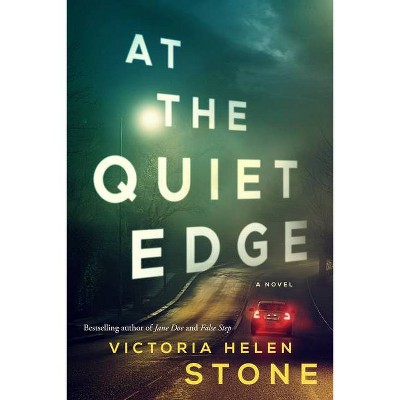
This month’s list holds what will likely be some unexpected treasures. Victoria Helen Stone’s At the Quiet Edge falls into the Domestic Suspense category, following mother Lily Brown and her son as they grapple with hidden secrets they probably have no business investigating.

The Half-Life of Ruby Fielding by author Lydia Kang is a Historical Fiction that takes place during World War II. A world filled with paranoia finds the two protagonists discovering a woman hidden under their stairs.

This month’s True Crime novel is The Vanishing Triangle by Claire McGowan. It plunges the reader into 1990 Ireland, one that is much darker than the sunny, grass covered hillsides that one would expect from the area.

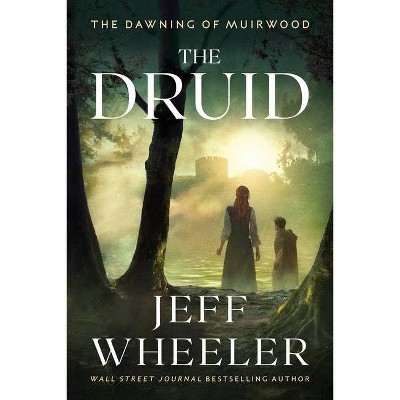
Jeff Wheeler’s The Druid is an Epic Fantasy that hurls the reader into the shoes of Eilean who seeks the power of an ancient magical tome.

This month’s Suspense novel is Elle Marr’s Strangers We Know. It sees Ivy Hon discovering a dark connection to a serial killer.

The Last Goddess by Katerina Tuckova is categorized under Literary Fiction. Time-worn myths and legends become reality in this interesting journey into superstition.

American Seoul is Helena Rho’s Memoir. We walk along her experiences of the past to uncover an inspiring story of self-discovery.

The Children’s Picture Book for this month is I Am Able to Shine written by Korey Watari and illustrated by Mike Wu. It is a small story about a girl who builds her confidence with each turn of the page.

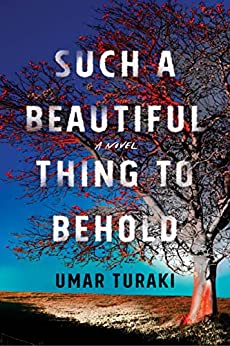
So you’re probably wondering by now what our pick for this month will be. Well it is one that has yet to be mentioned. Such a Beautiful Thing to Behold by Umar Turaki is this month’s Book Club Fiction. Reading the description has us excited about diving deeper into the small town, quarantined from the rest of the world. From what we can tell, this book might just diverge in all manner of directions, while promising to come back together before we flip the very last page. With a title that is indicative of finding the silver lining amidst the turmoil of this story’s illness, needless to say we are very excited to dive into this one!

Still Life Review

Still Life, by Louise Penny, is a crime fiction novel. In this book, chief inspector Armand Gamache from the Sûreté du Québec must investigate a crime within a small village in the Eastern Townships. Gamache tries to understand why anyone in Three Pines would want to kill a well-loved community member. Gamache knows that not everything is always as it seems, but he realizes that Three Pines will reveal its deepest darkest secrets if he watches closely enough.

Plot

What was intriguing about the plot was that it was attention-grabbing. I enjoyed how it always kept me on the edge of my seat. After every chapter, I just wanted to keep on reading more to figure out who killed Jane Neal. One flaw I noticed within this book was how illogical the plot was at times. A particular discovery occurred in the last few chapters that blew the doors wide open in the investigation. However, the way it was written, it seemed more like an afterthought, as if the author wrote herself into a corner and needed something to push the investigation along. Another vulnerability within this book was that there were not many chapters, and the length of the chapters was significantly prolonged. I noticed that chapters began to take longer to finish, but it didn’t detract from my overall interest in continuing to read the novel. This, though, is not the truth for everyone. Louise Penny could have had more chapters that were much briefer in length to deliver more cliff-hangers for the reader. Sadly, I would sometimes have to stop reading in a middle of a chapter, which decreases the overall reader experience of the novel.

Character development

I did not appreciate how Louise Penny introduced many characters. It was hard to keep up, and I found it unenjoyable when the author mentioned a character’s name, but I needed to return to the novel’s beginning to figure out who they were. Also, some of the characters acted hysterically at times which I didn’t quite understand. For example, Yvette Nichol acting arrogant suddenly or when Ruth acts hysterical in the bistro. At the beginning of the novel agent, Nichol seemed calm and very professional; she seemed content to be working in a team with Armand Gamache. As the book advanced, Agent Nichol revealed her genuine personality and finally, we see how she wasn’t a team player. When she was also making comments, we realized how unprofessional she was and outspoken, which eventually led Armand Gamache to make a hard decision.

I loved the character development of Peter Morrow. I admired when Peter asked what someone else would do when Clara was in distress and grieving over Jane for the first time in his life. In the scene, in the beginning, we see how he mentions he was jealous of the hold Jane had over Clara. Peter then decides to do what Jane would have done, and he lays down next to his wife and embraces her. “They settled, just for one blessed instant, on a place that held love, not loss” (Ch.3, p.238). This quote shows the love that Peter has for Clara.

Themes/Symbolism

What I appreciated within this novel is the symbolism. The symbolism that I enjoyed was of the hunting blind. The hunting blind symbolized a hidden identity within the small village. Clara also remarks that the hunting blind has an appropriate name since hunters who utilize the blind are blind to the cruelty of killing innocent animals. She implies that the hunters can not see the beauty within things. Penny demonstrates this when she states how hunters can not distinguish a tree from a partridge from a person.

One of the themes in this novel was judgment. This theme appears in the novel’s first part when Jane catches three individuals throwing manure at Gabri and Oliviers Bistro. Those three individuals passed a judgment due to these two characters’ relationship together. This activity within the novel demonstrates that judgement doesn’t always prove justice. Another example of judgment is when Armand Gamache observes the individuals’ actions, emotions, and personalities. His passing judgement didn’t have him expecting who the killer was.

Entertainment

I found this novel to be very entertaining. I learned a lot of things. For example, I discovered a lot about the different types of bows (recurve, crossbow, compound bow). Before this novel, I did not understand the difference. A crossbow is a bow that has a trigger to shoot the arrow, the compound bow has levers and pullies to help pull back the arrow, and the recurve bow gives a more significant amount of energy and speed while shooting an arrow.

What I also appreciated was how at the beginning of the book, the Québec culture is revealed. I was fond of how Louise Penny included some of Québec’s history, how francophones try to preserve their culture, and how many anglophones might feel about this. Penny illustrates this when Ben Hadley discusses how the English believed in individual rights and how the French felt like they had to protect their collective rights. This preservation of culture may cause anglophones to feel excluded.

What was interesting within Still Life was the ritual performed after Jane’s death. Where Myrna performs something called ‘smudging’ to cleanse away the evil spirits and make room for the good, they also had a prayer stick and tied, using yellow ribbon, all objects symbolic of Jane. For example, Myrna tied a book to the prayer stick and said, “This is for you, Jane, to thank you for sharing your love of the written word with me. Bless you.” (Ch.10, P.653)

Conclusion

Overall, this novel was well written. Louise Penny illustrated remarkable themes and symbolism within this narrative, such as the hunting blind and the theme of judgement. Although there were too many characters, the plot was confusing/illogical, and the chapters were lengthy. This series has excellent potential. The entertainment was incredible. Individuals who read this book will explore and learn about the culture of Québec and the different types of bows and arrows. Louise Penny kept the reader guessing who the killer was throughout the book. The narrative kept me engaged up until the end. With all these elements of the plot, character development, themes, writing style, and entertainment, this novel, on a 5-star scale, rates a 3.5/5.

Rating: 2.5 out of 5.

Written by:

Elisabeth McGovern

Edited by:

Alexandre McGovern

FINAL BREATH

They say that God has breathed life into us and all things

And I’m more certain of this when a chickadee sings.

I’ve asked my nurse to open the window to let the air in,

Suddenly God brings upon me His breath that formed wind.

And this is when I know that I will never be alone,

He has walked with me whenever and wherever I roamed.

That God’s presence presents itself in mysterious ways,

I wish I had known such things in my earlier days.

And my final breath left and carried far out the window,

To now go along, wherever the wind will blow.

It winds through the grass, and up in the trees.

It swirls toward the clouds and rustles the leaves.

And surely my friends and family, I have left,

But we will meet again in our life after death.

Written by:

Alexandre McGovern